THREE:These things did not pass without remark by the Opposition. Pulteney and Bolingbroke discussed them with much vigour and acrimony in The Craftsman. It was asserted in the House that the public burthens had increased instead of diminished since 1716; but Walpole contended that there had been a reduction of debt to the amount of two million five hundred thousand pounds; and his statement was supported by a large majority, and it was laid before the king. The Opposition then demanded an explanation of the expenditure of two hundred and fifty thousand pounds for secret service money. It was well understood that Walpole had used the greater part of it in buying up that triumphant majority which enabled him to carry the most[59] obnoxious measures. The demands of the Opposition were so vehement, and the abuse was so glaring, that even Walpole was embarrassed how to get rid of the question. He could only recur to the old plea, that the money had been spent on services highly advantageous to the State, but which could not properly be made public. Suddenly events lifted him out of his difficulty. News arrived that the King of Spain, who declined to ratify the preliminaries of peace entered into at Vienna, on hearing of the death of George I., hoping for a revolution, had now given way, and had issued what was called the Act of Pardo, ratifying the preliminaries, and referring all remaining difficulties to be settled at a congress to be held at Soissons.
FORE:An armistice was now demanded by the Allies¡ªit is said at the instance of Austria, who desired to act as mediator¡ªand gladly assented to by Napoleon, who was desirous of completing his preparations for a more determined attack. The armistice was signed on the 4th of June at the village of Pleisswitz.The Council now recalled the English troops from Rohilcund; and Bristow demanded, in the name of the Council, from Asaph-ul-Dowlah, the young Nabob, a full payment of all arrears; and announced that, Sujah Dowlah being dead, the treaty with him was at an end. Under pressure of these demands, Bristow, by instructions from the new regnant members of the Council, compelled the young Nabob to enter into a fresh treaty with them; and in this treaty they introduced a clause to the full as infamous as anything which Hastings had done. In return for renewing the possession of the provinces of Corah and Allahabad, they compelled him to cede to them the territory of Cheyte Sing, the Rajah of Benares, though this did not at all belong to the Nabob of Oude, and was, moreover, guaranteed to Cheyte Sing by Hastings, in solemn treaty. The revenue of Cheyte Sing, thus lawlessly taken possession of, amounted to twenty-two millions of rupees; and the Nabob of Oude was also, on his own account, bound to discharge all his father's debts and engagements to the Company, and to raise greatly the pay to the Company's brigade. Hastings utterly refused to sanction these proceedings; but the Directors at home, who cared not how or whence money came, warmly approved of the transactions.
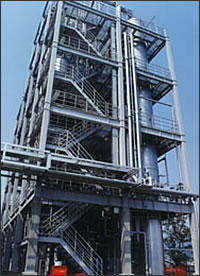
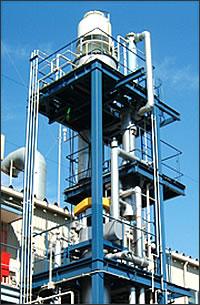
Methanol refinement systems, amyl alcohol refinement systems, ethanol refinement systems, hexanol distillation systems, propanol refinement systems, cyclohexanol distillation systems, isopropanol dehydration systems, ethylene glycol recovery systems, and butanol distillation systems.
FORE: Hugh Howard, made Postmaster-General.Mr. Roebuck, the next day, moved a counter-resolution in the following terms:¡ª"That the principles which have hitherto regulated the foreign policy of her Majesty's Government are such as were required to preserve untarnished the honour and dignity of this country, and, in times of unexampled difficulty, the best calculated to maintain peace between England and the various nations of the world." He supported this position in an able and lengthened speech. The chief ground of dispute was the demand of Palmerston for compensation to a person named Don Pacifico, a Jew, and by birth a British subject, who resided at Athens, and whose house had been attacked on a Sunday, his property destroyed, and his family beaten by a mob headed by young noblemen. The Greek Government refused him reparation, and he sought protection from England. There was also the case of Mr. Finlay, whose land was seized in order that it might be converted into a garden for the King of Greece, the owner being refused payment; Lord Aberdeen, when Foreign Secretary, having applied in vain for redress. There was also the case of H.M.S. Fant?me, whose boat's crew had been arrested by Greek soldiers; also other outrages equally serious. Lord Palmerston defended his policy with his wonted spirit and ability, and with triumphant success in a speech which, said Mr. Gladstone, lasted "from the dusk of one day to the dawn of another." Mr. Gladstone arraigned the conduct of the first Minister in sitting down contentedly under the censure of the House of Lords, by sheltering himself under precedents which were in fact no precedents at all. He charged Lord Palmerston with violating international law, by making reprisals upon Greek property to the extent of ¡ê80,000 to satisfy the exorbitant demands of Don Pacifico; the fruit of this policy being humiliation, in regard to France, and a lesson received without reply from the autocrat of all the Russia's. Mr. Cobden also assailed the policy of Lord Palmerston, and asked if there was no other way of settling such trifling matters than by sending fifteen ships of war into Greek waters, which had seized several gunboats, and more than forty merchantmen. Lord John Russell defended the policy of the Government, and concluded by declaring that by the verdict of that House and the people of England he was prepared to abide, fully convinced that the Government had preserved at the same time the honour of the country and the blessings of peace. Mr. Disraeli, on the other hand, maintained that the House of Lords had exercised a solemn duty in pronouncing a censure upon the policy which had led to such terrible results. This debate will[607] be rendered for ever memorable in our annals by the speech of Sir Robert Peel. It was one of the best speeches he ever delivered in that House, and it was his last. He argued strongly against intermeddling with the affairs of foreign nations in order to procure for them free institutions, and concluded with the expression of his belief that the cause of constitutional liberty would only be encumbered by our help; whilst by intruding it we should involve Great Britain in incalculable difficulties. When the hour for the division came the House was very full¡ªAyes¡ª310; Noes, 264; giving the Government a majority of 46.
Hexane distillation systems, tall oil distillation systems, benzene distillation systems, lubricating oil refinement systems, xylene-free distillation systems, low-boiling gas distillation systems, ethylbenzene recovery systems, fusel oil distillation systems, naphthalene distillation systems, propylene recovery systems, and turpentine oil distillation systems.
FORE:In answer to some queries submitted to the Attorney-General, Mr. Joy, he stated that when the old Association was suppressed, the balance of Catholic rent in the treasury was ¡ê14,000. He showed how the existing Act had been evaded, and how useless it was to attempt to prevent the agitation by any coercive measure. They held "fourteen days' meetings," and it was amusing to read the notices convening those meetings, which always ran thus:¡ª"A fourteen days' meeting will be held, pursuant to Act of Parliament"¡ªas if the Act had enjoined and required such meetings. Then there were aggregate meetings, and other "separate meetings," which were manifestly a continuation of the Association. The same members attended, and the same routine was observed. They also held simultaneous parochial meetings, by which the people were gathered into a solid and perilous confederacy.
Ether distillation systems, camphor distillation systems, epichlorohydrin distillation systems, aniline distillation systems, dioxane refinement systems, acetonitrile distillation systems, furfural refinement systems, formalin distillation systems, cyclohexane distillation systems, monoethanolamine rectification systems, polyglycol ether distillation systems, dimethylformamide recovery systems, acrylic glycol ether distillation systems, acrylonitrile refinement systems, acetone recovery systems, pyridine distillation systems, methyl ethyl ketone recovery systems, picoline distillation systems, methyl isobutyl ketone recovery systems, and acetaldehyde recovery systems.